The modern cycling internet is obsessed with carbohydrates, and for good reason. The current standard is to dissolve 100 to 120 grams of sugar into your bottles, drink every fifteen minutes, and never let your blood glucose drop. If you are peaking for a race and maximizing performance, it is the correct advice.
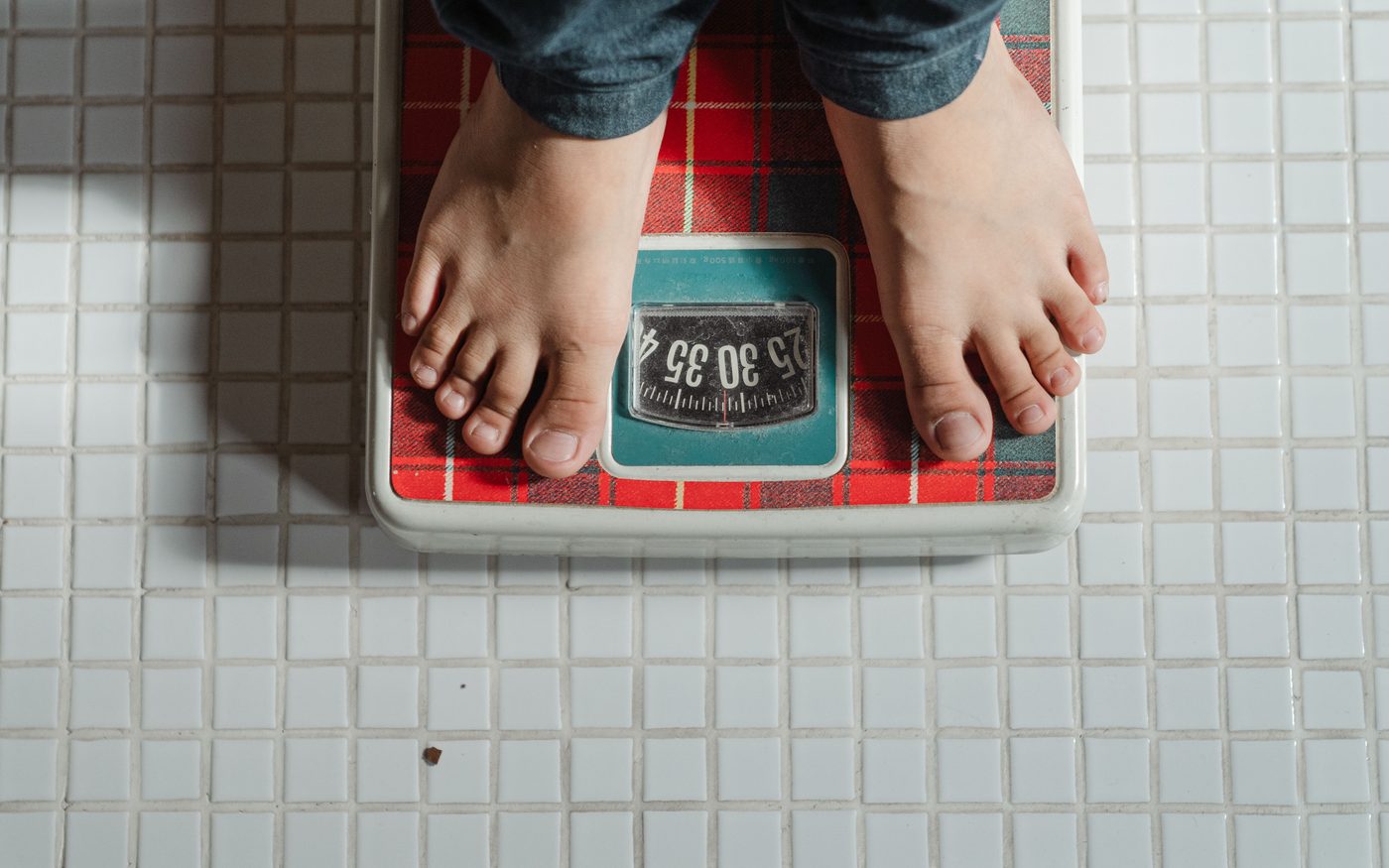
But if you are an amateur rider whose primary objective is losing fat without losing power, it is a mathematical trap. You cannot force body recomposition while saturating your system with 480 calories of pure carbohydrate every hour. You need an energy deficit. The problem is that endurance training in a caloric deficit is inherently catabolic. Left to its own devices, a body in a deficit will strip away heavy, metabolically expensive muscle tissue to balance the ledger. You will lose weight, but your power output will drop with it. You simply become a smaller, slower rider.
To preserve muscle mass while losing fat, you have to give the body a mechanical reason to keep it. You need tension. While strength training is the primary driver for this, your hours on the bike must contribute to the stimulus rather than fighting it. The tool for that is the high-torque, low-cadence tempo interval.
The physiology of torque and muscle preservation
Power on a bicycle is the product of two variables: how hard you push on the pedals (torque) and how fast you turn them (cadence). You can produce 200 watts by spinning lightly at 95 rpm, or you can produce 200 watts by pushing heavily at 60 rpm. The cardiovascular cost is similar. The muscular cost is entirely different.
When you ride at a standard cadence in zone 2 or low zone 3, your body relies almost exclusively on Type I slow-twitch muscle fibers. These fibers are incredibly fatigue-resistant, but they do not require much tension to operate and they do not signal the body to maintain muscle mass.
By dropping your cadence to 55–65 rpm while maintaining tempo wattage (75–85% of your FTP), the force required per pedal stroke increases dramatically. This mechanical tension forces your nervous system to recruit Type IIa fast-twitch muscle fibers at a sub-threshold intensity. This specific myofibrillar tension acts as a preservation signal. It tells your physiology that despite the energy deficit, the muscle tissue in your quads, glutes, and hamstrings is strictly necessary for survival.
Executing the low-cadence tempo session
This is not a maximal effort, and it is not a threshold test. It is a controlled, structural session that sits firmly in zone 3.
The High-Torque Tempo Block
Warm-up: 20 minutes easy zone 2 at your natural cadence (85–95 rpm).
Main set: 3 × 12 minutes at 75–85% of FTP. Cadence strictly 55–65 rpm.
Recovery: 5 minutes easy spinning between reps at 90+ rpm.
Cool-down: 15 minutes easy zone 2.
Execution dictates the value of the session. You must remain seated. If you stand up, you shift the load away from the target musculature and allow your body weight to do the work. Keep your upper body entirely quiet. Your hands should rest lightly on the hoods, with no pulling or wrestling the bars. All the force must be generated from the hips down.
If you do not know where your tempo zone is, you cannot guess this effort. Use a recent field test and run the numbers through the cycling zones calculator to find your exact wattage targets.
Progression across a block
Because the intensity is moderate, the progression comes from time under tension, not from pushing higher watts. Once 3 × 12 minutes feels structurally manageable, extend the intervals before you add intensity.
A standard four-week progression moves from 3 × 12 minutes, to 4 × 10 minutes, to 3 × 15 minutes, ending with 2 × 20 minutes. You only raise the wattage when you re-test your FTP at the end of the block.
Fueling the deficit without the post-ride binge
The most common mistake amateur cyclists make when trying to lose fat is riding fasted. Our methodology is clear on this: riding fasted is only useful for fat-utilization adaptations on very easy, short aerobic sessions. If you attempt a high-torque tempo session on an empty stomach, two things happen.
First, your muscular output drops, meaning you fail to generate the necessary tension to preserve lean mass. Second, your blood glucose crashes. You finish the ride, your cortisol spikes, and your brain triggers a massive release of ghrelin. You end up eating the entire kitchen an hour after you unclip, completely erasing the deficit you just suffered to create.
You do not need race-day fueling (90–120g/h) for a 90-minute tempo ride, but you must fuel the work. Carbohydrates are always a performance enhancer, even when the goal is body composition.
- The daily frame: Weight loss requires a baseline of 2g of protein per kilogram of body weight daily. This is non-negotiable for muscle preservation.
- Pre-ride: Consume low-fiber carbohydrates roughly an hour before the session starts.
- On the bike: Target 30 to 40 grams of carbohydrate per hour. This is enough to stabilize blood sugar, lower the perceived exertion, and prevent the post-ride hunger spike, while still keeping the session in a net energy deficit.
Structuring the week for body recomposition
A single low-cadence session does not change your body. It must sit inside a polarized weekly structure that respects your recovery capacity. When operating in an energy deficit, fatigue accumulates faster than it does at maintenance calories.
A typical structured week for fat loss contains one high-torque tempo session, one session with short efforts above threshold to maintain top-end cardiovascular fitness, and two to three low zone 2 rides to build aerobic base without generating residual fatigue.
Crucially, strength training is a non-negotiable component of our methodology. Low-cadence riding preserves muscle specific to the pedal stroke, but it does not replace the systemic anabolic stimulus of lifting weights. If you want to change your body composition, you must lift.
We build our weight loss training plans specifically around this balance of targeted cycling tension and progressive strength work. Note that all of our cycling plans require a power meter to regulate the intensity correctly; heart rate responds too slowly for the precision required here.
8 Week Time-Crunched Weight Loss: Ride 🚴 + Full Gym Lifting 🏋️ - Body recomposition
An 8-week power-based cycling block paired with a full gym progression to force body recomposition and preserve watts.
US$ 39.99
16 Week Gran Fondo Weight Loss: "Climb Faster" Prep 🚴 + Home Strength 🏠 (No Gym)
A 16-week macrocycle for riders aiming to drop weight for a Gran Fondo, using home strength routines that require no gym access.
US$ 59.99
If you genuinely only have time for the bike and cannot fit in dedicated strength days, the low-cadence strategy becomes even more critical. It is the only mechanical tension your legs will see.
The joint health counter-argument
The immediate objection to low-cadence riding is always orthopedic: Doesn't grinding a big gear destroy your knees?
It is a valid concern, and if executed poorly, it is true. If you attempt low-cadence work at VO2max intensities, or if you lack a foundational aerobic base, the sheer force applied to the patellar tendon can cause acute inflammation. If your bike fit is drastically wrong—particularly if your saddle is too low—high torque will compress the knee joint uncomfortably.
But that is why this strategy is restricted to tempo intensity. At 75 to 85% of your FTP, the absolute force running through the joint is well within the tolerance of a healthy tendon. It acts as a strengthening protocol for the connective tissue, much like a controlled leg press.
Furthermore, low-cadence tempo is a specific drill for a specific adaptation. It is not a permanent change to your natural pedal stroke. You do it for 36 minutes on a Tuesday to signal muscle retention, and you spend the rest of your week spinning smoothly at 90 rpm. Applied with discipline, it is the most effective tool an amateur cyclist has to ensure the weight they lose on the scale is fat, and the power they built on the bike stays exactly where it is.