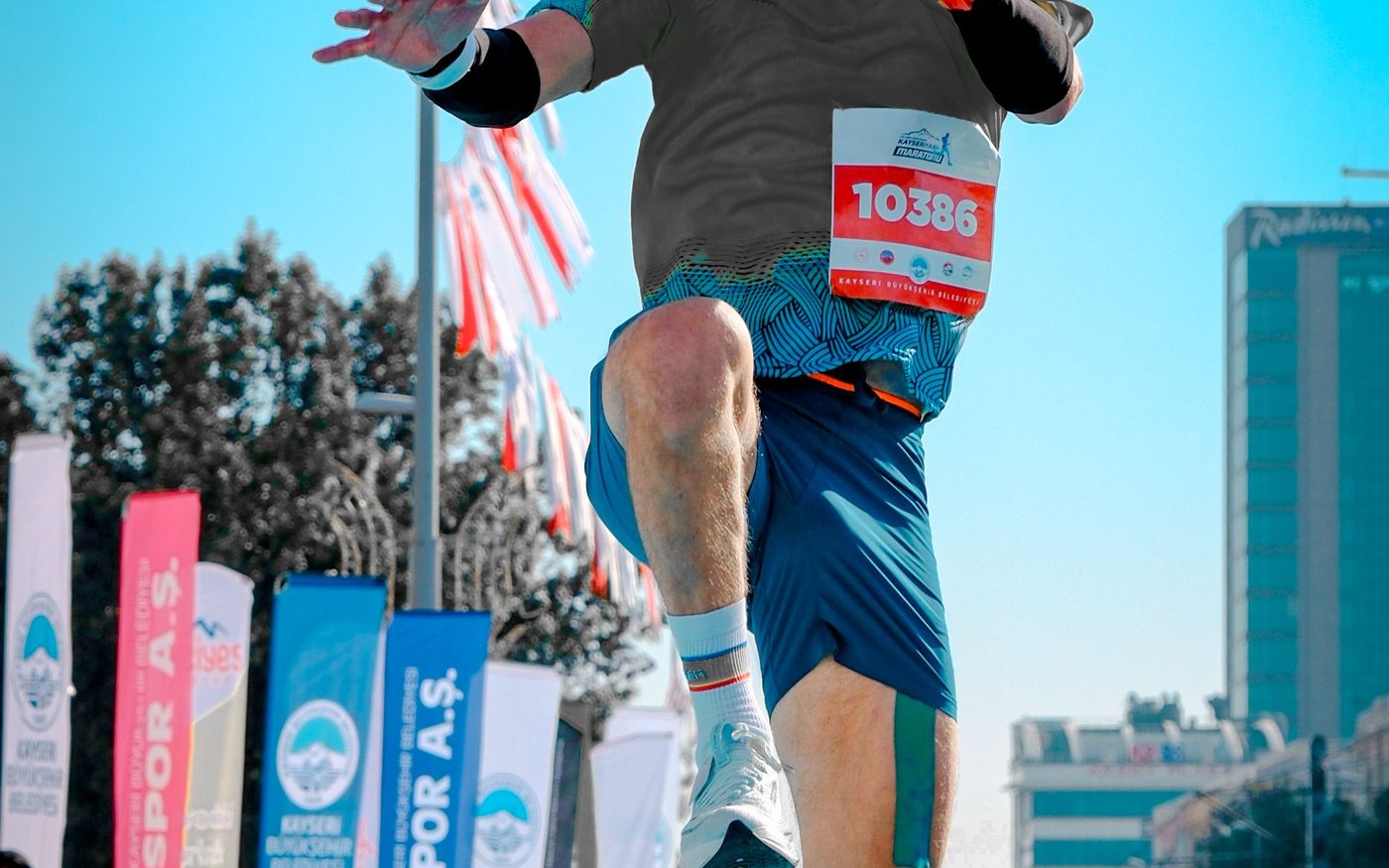
The thermometer rises from 68°F to 86°F (20°C to 30°C), and half the competitors end up walking the marathon. They do not fail due to a lack of muscular training or willpower. They fail because their digestive system shuts down.
Sports science explains this from the lab: as your core temperature rises, your body diverts blood from the gastrointestinal tract to the skin to dissipate heat. Without sufficient blood flow, the stomach stops processing what you put in. Carbohydrates accumulate, fluids are not absorbed, and the result is nausea, cramps, or diarrhea.
That is the theory. But on race day, knowing about thermoregulation is useless if you do not know how to modify your nutrition plan in real time. Stomach issues in a hot triathlon are not bad luck. They are calculation errors between intensity, carbohydrate concentration, and intake rate.
This article translates the theory into decision rules. It is the protocol to adapt your strategy when the weather turns against you.
The mechanical problem: concentration versus intake rate
When you train nutrition for race day, your goal is to accustom the gut to tolerate a high volume of carbohydrates. The Triaperformance standard is training the system to assimilate up to 120 grams per hour (g/h) on the bike and up to 60 g/h on the run.
In ideal conditions, you process that amount by diluting it in water. But in the heat, your sweat rate spikes. You lose water faster than you can replace it. If you maintain the same intake of gels or powder (carbohydrates) but become dehydrated, the mixture inside your stomach becomes hypertonic. It is too concentrated.
Your body, attempting to dilute that carbohydrate bolus so it can be absorbed, pulls water from the blood and sends it to the intestine. At that moment, the stomach bloats, fluid sloshes, and minutes later, you have to stop at a porta-john.
The post-workout diagnosis: If you experience diarrhea after a long ride, it is usually due to two factors. Either it is product tolerance (something you should already know), or it is a concentration versus intake rate error. The solution is to recalculate the grams against your actual minutes of consumption and, in the next session, dilute the mixture further or reduce the intake rate.
Step 1: Pace overrides the plan
The most common error on hot days is trying to sustain the target pace prescribed by your watch, ignoring heart rate and perceived exertion.
Heat raises your heart rate. If your threshold pace usually sits at 160 beats per minute, at 90°F (32°C) that same pace might cost you 172 beats. If you force the pace to maintain your minutes per mile or kilometer, you are racing at a much higher relative intensity than planned.
Higher intensity means less blood in the stomach. Less blood in the stomach means blocked digestion. If you are not acclimated to the heat of the race venue, the rule is strict: pace by heart rate or perceived exertion, never by pure speed.
Dropping your pace by 8 to 16 seconds per mile (5 to 10 seconds per kilometer) in the early stages is not weakness. It is the only way to keep the aerobic system in charge and ensure the stomach has enough blood flow to process the carbohydrates you need to finish.
8 Week Olympic Speed: Triathlon 🏊♂️🚴🏃 (Polarized 80/20)
Dial in your race pace in the heat
US$ 39.99
Step 2: Execution on the bike
The bike is where triathlon nutrition is won or lost. It is the segment where you can consume the most calories because there is no mechanical impact bouncing your stomach.
Our goal is to push intake up to 120 g/h. To achieve this without collapsing the digestive system on an extremely hot day, your fluid logistics must be flawless.
- The athlete carries the powder, the course provides the water. Your bottles should carry the concentrated carbohydrate powder mixture. You take plain water from the aid stations to dilute and drink.
- Adjusting dilution for heat: If you normally need 750 ml (25 oz) of water to process 100 g of carbohydrates, on a hot day you will need over a liter (34 oz) for those same 100 g. Your water requirement goes up due to sweat, but your gastric emptying capacity remains limited.
- The decision to reduce: If you feel your stomach stop and water sloshing as you pedal, pause your carbohydrate intake temporarily. Drink only plain water until your stomach empties. It is better to lower your average to 90 g/h and assimilate it, than to push 120 g/h and throw up.
Step 3: Transition and the run
Running in the heat is where physical impact compounds with accumulated dehydration. The gastrointestinal tract is already stressed from the bike. Here, the absolute ceiling is 60 g/h, typically executed with one gel every 20 minutes.
Sodium plays a crucial role. The baseline is to consume about 200 mg of sodium every 40 minutes. However, this is the variable that changes most with the weather. In cold climates (like a triathlon in Bogotá), you may need less. In hot and humid conditions, that figure must scale with your sweat rate to prevent hyponatremia and maintain blood volume, which in turn helps irrigate the stomach.
The caffeine protocol: We use caffeine strategically. 200 mg before the start and 200 mg in T1 (bike-to-run transition). This puts about 300 mg active in your system during the run. Caffeine reduces perceived exertion, helping you maintain form when heat exhaustion hits. Note: Train this dose beforehand starting from 100 mg intakes, as it depends on body weight and individual tolerance.
Step 4: The 72-hour defense
You can execute the perfect pace and exact hydration, and still have stomach issues if you reach the start line with a gut full of fiber. The heat merely accelerates a problem that brewed three days prior.
Carbohydrate loading is not a license to eat pizza. It is a mathematical, methodical protocol that starts 48 to 72 hours before the gun goes off.
- Eliminate fiber from day -3. No raw vegetables, no fruit with skin, no whole grains. The goal is to empty the intestine of residue.
- Target 10 g/kg of body weight. Between 1 and 1.5 days before the race, your intake should reach up to 10 grams of white, low-fiber carbohydrates per kilogram of body weight. White rice, classic pasta, white bread. If it is your first time doing a strict load, start at 5 g/kg and scale up in future races.
- Lean protein. Chicken or eggs. Fats should stay between 40 and 80 g daily because they slow down digestion—something you do not want close to the event.
If you arrive at the race with full glycogen stores and an empty intestine, you remove a massive burden from your digestive system. When the heat tries to shut down your stomach, it will not have to fight a salad from the night before.
18 Week Marathon Build: Heart Rate 💓 (Intermediate Vol: 90-110km)
Build your aerobic engine by heart rate
US$ 59.99
The "racing by feel" argument
The most common objection to this level of mathematical planning is relaxed empirical experience: "I never measure carbohydrate grams or sodium. I just eat when I'm hungry and drink when I'm thirsty, and I do fine."
It is a valid argument, until it isn't. Drinking to thirst works perfectly on a three-hour Zone 2 ride at 59°F (15°C). Under those conditions, the body has a massive margin for error. Blood flows freely, the sweat rate is low, and thermal stress is zero.
But a race is not a Zone 2 training session. A Half Ironman or an Ironman at 90°F (32°C) in Zone 3 pushes the body to the limit of its physiological capacity. At that intensity and temperature, the evolutionary thirst mechanism reacts too slowly to the actual rate of fluid loss. If you wait until you are thirsty to start drinking, you are already dehydrated. If you wait for that dehydration to suddenly force 60 grams of carbohydrates into a stomach with no blood flow, the stomach will reject them.
The rules for grams per hour and milligrams of sodium do not exist to complicate your race. They exist to guarantee that, when the heat eliminates your margin for error, the math keeps your body running until you cross the finish line. To execute these protocols across all your sessions, you can access our complete training library with All-Access for US$39.99/mo.