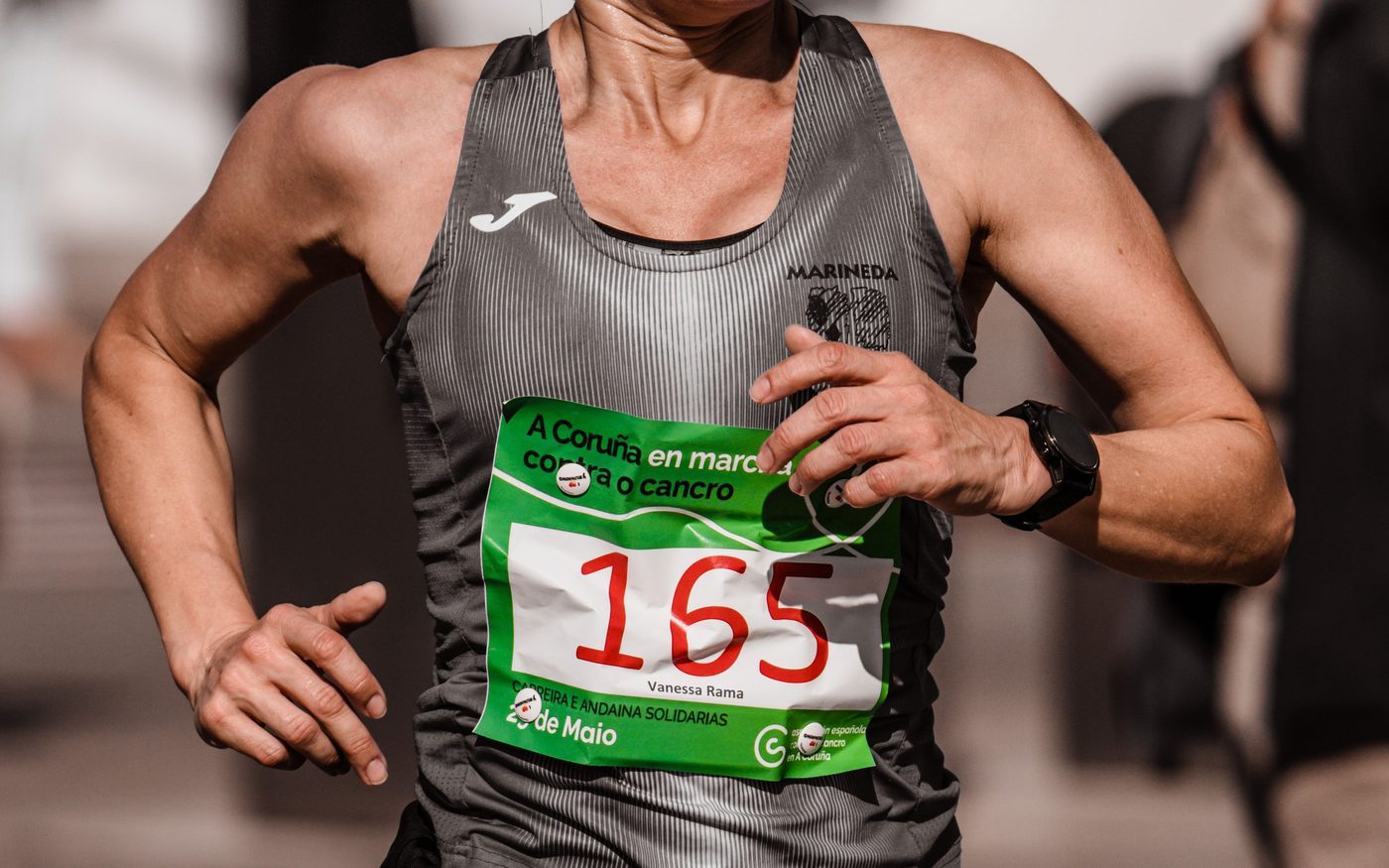
The Achilles tendon functions as a high-tension mechanical spring. When you run at a standard easy pace, this tissue absorbs and releases a force equivalent to three or four times your body weight with every stride. Pick up the pace or run uphill, and that load can reach six to eight times your weight.
That stretch-shortening cycle is what makes running efficient. It is also why the tendon fails when training load exceeds its structural recovery capacity.
The traditional amateur response to Achilles tendon pain is absolute rest. Stopping all activity seems like the logical choice to eliminate the pain, but it is a long-term mistake. Passive rest reduces discomfort, but it also reduces tendon stiffness and the tissue's capacity to handle load. The result is predictable: weeks without running, a loss of aerobic fitness, and an almost immediate relapse when trying to resume training because the tendon is now weaker than before.
The effective strategy is not to stop using the leg, but to change the type of mechanical load. This article details the static-to-impact load transition protocol we use to maintain tendon structure without aggravating the injury.
Medical red line: Achilles tendon pain requires medical or physical therapy evaluation to get an accurate diagnosis and rule out partial tears. This article addresses training load management and assumes you already have medical clearance to perform strength exercises. If you are looking for information on initial pain management, read our article on To run or not to run with Achilles tendon pain. We do not prescribe anti-inflammatories or painkillers; any pharmacological decisions are strictly between you and your doctor.
Phase 1: Heavy isometric loading for pain control
When the tendon is reactive, speed of contraction is your enemy. The tissue does not tolerate bouncing or fast movements. However, it handles sustained tension exceptionally well.
Heavy isometric contractions have a proven analgesic effect on tendinopathies and send the necessary mechanical signal to prevent muscle and tendon from losing capacity. Instead of raising and lowering your heel, you hold a static position under load.
The initial protocol consists of 5 sets of 45-second isometric heel holds, with 2 full minutes of rest between sets. The load must be heavy, around 70 to 80% of your maximum voluntary contraction (MVC). If doing this single-legged with your own body weight feels easy and doesn't generate muscle fatigue by the end of the 45 seconds, you need to add weight using a gym machine or holding a heavy dumbbell.
The exercise must be performed in two different positions to work the entire calf complex:
- With the knee extended: Transfers most of the load to the gastrocnemius (the upper, visible part of the calf).
- With the knee flexed at 45 degrees: Partially bypasses the gastrocnemius and transfers the load to the soleus, a foundational muscle that absorbs a massive amount of impact during running.
The pain management rule during this phase is strict: discomfort during the exercise should not exceed a 3 or 4 on a 1-to-10 scale. Furthermore, the pain must dissipate quickly after finishing the session. If the pain increases hours later or the following morning, the load was excessive and you must drop the weight for the next session.
Phase 2: Heavy Slow Resistance (HSR)
Once the tendon tolerates isometric loading without severe morning stiffness, the goal is to reintroduce range of motion. Traditionally, runners used the Alfredson protocol, which involved hundreds of daily eccentric repetitions. Current evidence shows similar results, but with much higher compliance, using the Heavy Slow Resistance (HSR) protocol.
The tendon is highly sensitive to speed. A fast movement irritates it; a slow movement under high tension alters its structure and promotes collagen synthesis. The HSR protocol is executed three times a week, not every day, adhering to a strict 3-0-3-0 tempo. That means 3 seconds to push up (concentric phase), zero seconds of pause, and 3 seconds to lower down (eccentric phase).
The load progression lasts 12 weeks and moves from moderate volume toward maximal loads:
- Weeks 1 to 3: 3 sets of 15 repetition maximum (15RM).
- Weeks 4 to 6: 3 sets of 12RM.
- Weeks 7 to 9: 4 sets of 10RM.
- Weeks 10 to 12: 4 sets of 8RM to 6RM.
The most common mistake in this phase is going too light. If you reach repetition 15 and feel like you could do 5 more, the weight is insufficient. The tendon requires a high mechanical stimulus to adapt.
Maintaining your aerobic base: The role of the bike
The biggest fear of an injured runner is losing months of accumulated aerobic work. Your cardiovascular system doesn't know your Achilles tendon is inflamed; it only responds to cardiac output and oxygen consumption. You can maintain 100% of your aerobic base by transferring the volume to the bike or elliptical.
Cycling is a perfect cross-training tool for Achilles tendinopathy. Pedaling completely eliminates the flight phase and ground impact. The calf and soleus are still working, but they do so almost isometrically to stabilize the ankle and transfer force from the quads and glutes to the pedal. There is no stretch-shortening cycle, keeping the tendon safe from ballistic stress.
To match the training load, you have to adjust time and intensity. Running generates more muscle damage and elevates your heart rate more than cycling. As a general rule, 60 minutes of easy running in Zone 2 is equivalent to about 75 to 90 minutes of cycling in Zone 2. Additionally, your heart rate on the bike will naturally be lower. Use our cycling training zones calculator to adjust your heart rate or power ranges and ensure your cross-training actually stays in the correct aerobic domain.
Phase 3: Impact progression and return to running
A tendon that can slowly lift 100 kilos (220 lbs) cannot necessarily handle the rebound of running at 5:00/km (8:00/mile). The transition between heavy strength work and continuous running requires a bridge: low-level plyometrics.
Before running, the tendon must prove it can store and release energy rapidly. This is evaluated and trained using two-footed bouncing exercises (pogo jumps) or jumping rope. The goal is to keep the knees relatively stiff and bounce using the ankles, with minimal ground contact times.
When you can tolerate 3 sets of 1-minute jump rope intervals with no adverse reaction in the following 24 hours, you are ready to start a walk-run protocol. The reintroduction to running should never be continuous. It is structured in intervals to prevent cumulative tendon fatigue.
A conservative starting point is alternating 1 minute of easy jogging with 4 minutes of brisk walking, repeating the block 4 to 6 times. The progression gradually increases jogging time and reduces walking time over several weeks, always maintaining interleaved rest days where you continue using the bike for aerobic volume.
The 24-hour rule
Unlike muscle tissue, tendons have very poor blood supply. This means their inflammatory and pain response is delayed. If you run on a Tuesday afternoon, you likely won't feel the true impact of that session until Wednesday morning when you take your first steps out of bed.
Therefore, progression is never evaluated during the workout. It is evaluated the next morning. If morning stiffness is manageable and disappears after a few minutes of walking, the load was appropriate. If you limp for half an hour or the tendon is visibly swollen compared to the day before, you step back in the progression.
The complete protocol to apply in your training: Theory tells you what to do, but execution requires precise numbers. The detailed 12-week document with exact RM percentages, the impact progression chart, walk/run ratios, and phase-transition criteria is documented in our member area. You can access this protocol and our entire catalog of plans by joining All-Access for US$39.99/mo.
The counter-argument: Why not just rest?
The most common objection to this approach is an apparent lack of common sense: if something hurts when moving, the safest thing should be to stop moving it entirely until it heals.
It is true that absolute passive rest will reduce your pain to zero faster than a loading protocol. If you limit yourself to the bare minimum of walking for three weeks, the tendon will stop hurting in your daily life. The problem is that pain is not an indicator of structural capacity.
During that rest period, the tendon has lost stiffness and cross-sectional area. The calf muscles have slightly atrophied. When the pain disappears and you decide to go out and test it with a continuous 8-kilometer (5-mile) jog, your aerobic system will push you to your usual pace, but your tendons no longer have the mechanical capacity they had a month ago. The tissue, now weaker, receives a sudden load and the injury cycle restarts immediately.
Passive rest cures the symptom temporarily, but guarantees a relapse in a runner. Progressive and isometric loading keeps the pain under control (2 or 3 out of 10) during the rehabilitation process, but it alters the collagen structure, increases mechanical tolerance, and builds a tendon capable of withstanding the real demands of the pavement. Rehabilitating a tendon doesn't mean silencing it; it means preparing it for impact.